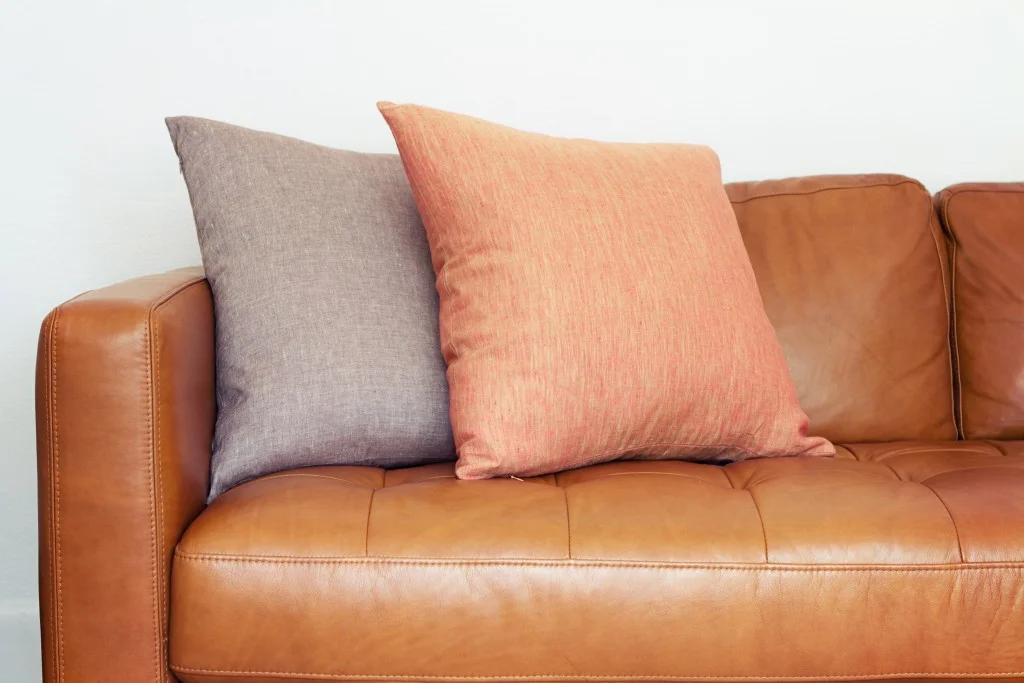
3. Leather – pretty self-explanatory….or is it?? Because leather is probably the most durable of all upholstery choices, many companies are trying to offer this feature at a more affordable price point, sometimes defeating the purpose of choosing leather. There are now “recycled,” "blended," "bonded," and “renewed” leathers that aren’t really leather at all (by now I'm sure there's more than that). They are typically polyester backings with a very thin layer of ground up leather scraps that have been remolded and dyed back into a thin piece of upholstery. Any honest and salesperson will tell you this. While they perform well, the colorfastness is weak, the surface is easily scratched, and it doesn’t breath like real leather. You want to look for the words “top grain” or “genuine” leather. Real leathers are worth the price.
Pros: breathable (when top grain—that is, the top most layer of cow skin—a true leather will not make you sweaty), extremely durable, can be repaired and refinished by a leather professional giving you years and years of use, ages and patinas beautifully
Cons: the most expensive option
Good to know: for optimal color-fastness and longevity, make sure the leather is not surface-dyed—ask for a sample of the leather and turn it over. If the color on the back matches the front, it will be easiest for a leather specialist to work with in repairing it, should you tear, burn, or scratch it.
One of the biggest fears with leather and pets is that cat or dog nails will “puncture” the leather. This is simply untrue, and only brought about because there are so many cheap and imitation leathers out there leading consumers to believe that leather is not as durable as it seems. If you have a leather purse, or shoe, or belt, imagine trying to “puncture” that thing. It would take a nail and lot of hammering before you did any damage!